
Blog
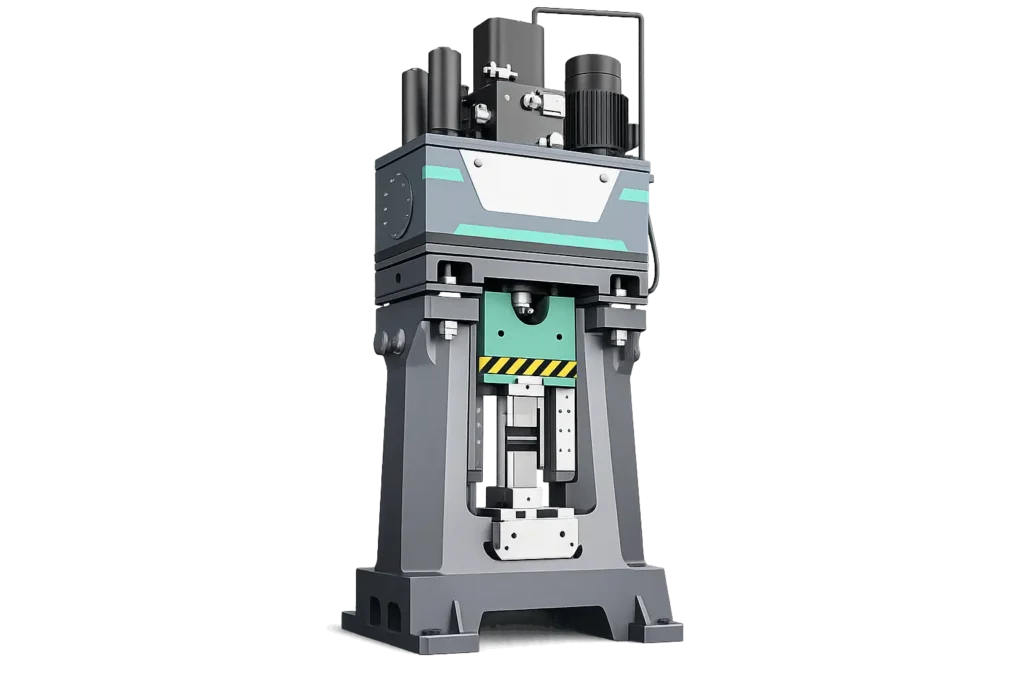
CNC Hydraulic Closed Die Forging Hammer Production Line
A CNC hydraulic closed die forging hammer production line must coordinate billet preparation, heating, handling, forging and downstream inspection. Buying the hammer alone does not establish the output, part quality or automation capability of the complete cell.
This guide explains how buyers can define the process route, identify bottlenecks and compare supplier scope before ordering. For available machinery and project enquiries, visit our CNC Hydraulic Closed Die Forging Hammer machinery page.
How the Complete Forging Line Works
A typical route starts with cut billets, followed by heating, temperature checking and transfer into the dies. Depending on the component, preforming or several die impressions may be required before flash trimming, cooling, heat treatment and inspection. The approved forging route determines which stations belong in the quotation.
The hammer delivers a sequence of blows, while its controls manage the specified operating parameters. Automation must coordinate that sequence with safe loading, gripping and removal. A programmable hammer is one part of the line; it does not by itself make the entire process automatic.
Key Technical Considerations
1. Billet cutting and preparation
Billet mass, diameter, length and cut-end condition should be specified from the forging and flash allowances. Variation at the cutting stage can affect cavity filling and the material left for trimming. Compare the proposed cutting method with the material grade, section size and acceptable mass tolerance.
Ask how billets are identified, counted and presented to the heater. Include provisions for mixed sizes, short remnants, rejected cuts and changeovers. State whether cutting equipment is included in the line supplier’s scope or supplied separately.
2. Heating and temperature control
Define the permitted forging-temperature window for the exact material grade and route. Heater selection should consider billet size, target throughput, temperature uniformity and the time spent transferring and forging each billet. Installed heater power alone does not confirm usable line output.
Agree where temperature is measured, how the measuring system is checked, and how unsuitable billets are diverted. Include start-up, production pauses and restart conditions. A waiting hot billet can move outside its approved process window even when the heater is operating correctly.
3. Transfer to the hammer
Assess loading, repositioning between impressions and removal as separate handling duties. A feeder or robot must be suitable for the hot workpiece, grip geometry, reach, payload and available access. Its gripper and operating sequence must also accommodate the hammer environment and any workpiece movement during forging.
Check the complete movement sequence with the dies, guards and lubrication equipment in place. Specify how a misgrip, dropped billet or incomplete forging is detected and recovered. A robot’s catalogue cycle time is not evidence of the finished cell’s production rate.
4. Trimming and downstream handling
Where flash is produced, the trimming press, tooling and transfer arrangement must suit the forging temperature, geometry and required rate. Agree how parts are oriented, how flash is removed and how scrap leaves the cell without obstructing handling or maintenance.
Include cooling, collection and inspection in the capacity assessment. Define what happens when a downstream station stops: upstream production may need to pause or divert parts under an agreed process. Avoid an uncontrolled accumulation of hot forgings between stations.
5. Control and safety integration
Prepare an interface list covering station-ready signals, permitted robot positions, billet presence, lubrication, cycle completion and fault responses. Separate production coordination from the safety functions required by the risk assessment. The responsible integrator should define and validate the complete safety concept.
Buyers should confirm guarding, access controls, emergency stops, isolation arrangements and controlled restart after a fault. Ask who supplies the electrical drawings, operating instructions, training and acceptance records. Do not assume separately purchased machines will communicate or stop together without integration work.
Production-Line and Integration Considerations
Coordinating the Complete Forging Cell
Start with the required number of accepted forgings per shift, then work backwards through the route. Record the number of blows and impressions, transfer time, lubrication, trimming and inspection. Include planned changeovers and realistic allowances for rejects and interruptions when comparing proposals.
The slowest effective station can constrain line output. Ask the supplier to identify its production assumptions and demonstrate the agreed cycle with representative material and tooling. Factory acceptance should record the process conditions, accepted-part criteria and the scope of any site-dependent performance checks.
| Line interface | Buyer’s question | Evidence to request |
|---|---|---|
| Billet to heater | Are size, mass and feed presentation compatible? | Billet specification, cutting tolerance and loading drawing |
| Heater to forging | Will the billet remain within the approved temperature window? | Temperature-check locations, transfer sequence and reject route |
| Handler to hammer | Can loading and repositioning occur without interference? | Cell layout, gripper drawings and checked movement sequence |
| Forging to trimming | Can the next station accept each part at the required rate? | Trimming-tool concept, orientation method and cycle assessment |
| Complete cell | Who owns integration and acceptance? | Scope matrix, control interfaces and agreed test plan |
Suitable Applications
Potential applications include suitable automotive forgings, hand-tool blanks, agricultural parts and other industrial components produced by impression-die hot forging. The component’s geometry, tolerances, material and production volume must support the proposed process.
Automation is often worth assessing where repeatable part families and sustained production justify dedicated handling and tooling. For frequent changes or low-volume work, a more flexible assisted arrangement may be appropriate. Compare changeover effort and total operating requirements rather than selecting the highest automation level by default.
How to Evaluate the Correct Configuration
Supply finished-part and forging drawings, material grade, billet data, die sequence and the required accepted output. Hammer selection should address the deformation work, die arrangement and approved blow sequence; component mass on its own is insufficient. Request a process review and trials where the application requires them.
Compare complete proposals using a scope matrix: hammer, dies, heating, handling, lubrication, trimming, controls, guarding, installation and acceptance. Identify exclusions, customer-supplied equipment and the party responsible for every interface. A lower machine-only price may leave significant integration work outside the quotation.
For an existing workshop, check foundations, available power, hydraulic cooling, lifting access, floor layout and maintenance space before confirming the configuration. Ask for utility demands under the proposed duty, not just a list of installed motor ratings.
Materials and Component Suitability
The exact material grade affects heating practice, flow behaviour, lubrication, die wear and subsequent heat treatment. Carbon steel, alloy steel, stainless steel and suitable non-ferrous alloys require their own process assessment; they should not be treated as interchangeable production programmes.
Thin sections, deep cavities, abrupt changes in section and the number of impressions can change the forming and transfer requirements. Confirm the forging route, temperature limits and inspection criteria before selecting a project-specific configuration. Avoid assigning an unverified model or capacity from finished-part weight alone.
Frequently Asked Questions
What equipment belongs in a closed die forging hammer line?
The complete line may include billet cutting, heating, temperature checking, handling, the CNC hydraulic hammer, lubrication, trimming, cooling and inspection. The agreed forging route determines the actual scope; heat treatment or preforming may be separate operations.
How should buyers assess production capacity?
Ask for an assessment of accepted parts per hour or shift using the proposed material, dies, blow sequence and handling route. Check the assumptions for heating, trimming, rejects, pauses and changeovers. The hammer’s blow frequency alone does not establish finished-line output.
Can existing heating or trimming equipment be reused?
It may be possible after checking the existing equipment’s capacity, layout, controls and safety interfaces. Record which supplier owns each interface and any modifications. Compatibility should be demonstrated before treating retained equipment as part of the accepted line.
Is a fully automated line always the best choice?
Not necessarily. The right level depends on part consistency, production volume, changeovers, operator duties and the justified investment. Manual, assisted and robotic handling should be compared against the same production and safety requirements.
What should an acceptance test cover?
Agree representative billets and tooling, the permitted process settings, accepted-part criteria, production trial duration, changeover checks and safety-function validation. Record which tests occur at the factory and which depend on the installed site conditions.
Information to Provide for a Quotation
For a useful technical and commercial review, please provide:
- Finished component and forging drawings
- Exact material grade and applicable standard
- Finished, forged and billet weights
- Billet dimensions and heating method
- Proposed die sequence and available tooling information
- Required hourly, shift and annual output
- Manual, assisted or robotic handling requirements
- Factory layout, voltage, frequency and utility conditions
- Required delivery, installation, training and documentation scope
Technical Review and Next Step
Before placing an order, reconcile the forging route, line layout, supply responsibilities and acceptance plan. Resolve assumptions about retained equipment, utilities, tooling and production rate in the written specification.
Send your component drawings, material and output requirements to Wiz Forging Machinery for a technical review and quotation. The proposed CNC hydraulic closed die forging hammer and supporting equipment should be selected together around the confirmed application.