
Blog
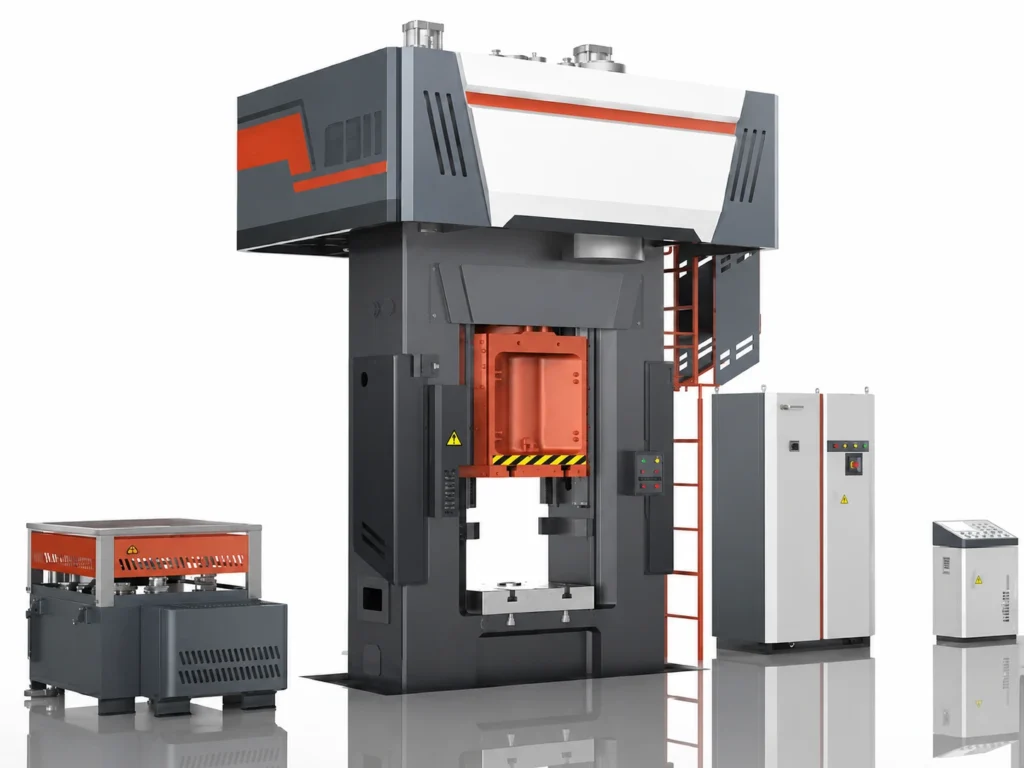
Electric Screw Press for Automotive Parts Forging
Automotive forging covers a wide range of materials, shapes, tolerances and production volumes. An electric screw press may be suitable for closed die forging, precision forging, sizing and calibration when the machine, dies and production process are matched to the individual component.
Using an Electric Screw Press for Automotive Forgings
The press delivers forming energy through an electrically driven screw mechanism. Adjustable operating settings can support different stages of a forging sequence, while the final process is determined by the component, material, billet, dies and production target.
Automotive Applications Require Individual Assessment
Component Drawing and Material
Possible applications can include transmission, steering, suspension, drivetrain, chassis and engine-related components. These examples do not mean one press configuration suits every part. Each component must be assessed on its own technical requirements.
Billet Size and Forging Temperature
The finished drawing, material grade, tolerances and required mechanical properties are the starting point. Heat treatment, grain flow and machining allowances may also affect the forging design.
Projected Area and Forming Stages
Billet dimensions and weight influence heating, handling and material flow. The specified forging temperature should be maintained from the heater to the dies to support a stable process.
Die Design and Material Flow
Press selection should consider projected forging area, part geometry and the number of stages or blows. Pre-forming, blocking and finishing operations may require different energy settings and die arrangements.
Controllable Energy and Repeatability
Die cavities, flash design, draft angles, radii, lubrication and ejection influence fill and die life. Tooling development should be coordinated with the proposed press and forming sequence.
Production Rate and Changeovers
Automation for Automotive Forging
Controllable forming energy can help establish repeatable operating conditions. Consistent results still depend on billet temperature, transfer time, die condition, lubrication and accurate positioning.
Required hourly output, batch size and product variety affect the choice between manual, semi-automatic and automated operation. Die-change time and recipe management should be considered when several components share one press.
Quality Planning
A line may include billet preparation, induction heating, temperature monitoring, robot transfer, die lubrication, trimming and conveyors. Automation should be designed around component orientation, gripping, cycle time and safe access.
Technical Information Needed
Inspection requirements may include dimensions, surface condition, weight, material traceability and process records. The production plan should define what is checked, when it is checked and how unsuitable billets or forgings are separated.
Selecting the Complete Solution
- Finished component drawing
- Material specification
- Finished and trimmed weight
- Billet dimensions and weight
- Forging temperature
- Projected forging area
- Forming stages and die concept
- Required production rate
- Loading and automation requirements
Frequently Asked Questions
Can one electric screw press produce several automotive parts?
Potentially, provided each part falls within the machine’s operating range and suitable dies, settings and handling arrangements are used.
Is component weight enough to select press capacity?
No. Projected area, material, billet, geometry, forming stages, temperature and die arrangement must also be reviewed.
Can automation be added later?
It may be possible when space, controls and interfaces are planned in advance. A future automation requirement should be discussed during the original line design.
Is an electric screw press suitable for high-volume production?
It can be, when the press, heating, handling, dies and downstream equipment are designed for the required cycle and availability.
What should be sent for a quotation?
Send the component drawing, material, billet details, forging sequence, target output and factory requirements for a technical review.
Discuss Your Electric Screw Press Project
Send us your component drawing, material, billet dimensions, forging stages and required production rate for a technical review.
Electric Screw Press Solutions from Wiz Forging Machinery
Wiz Forging Machinery provides electric screw press and forging-line solutions for international manufacturers. Each enquiry is reviewed according to the component, material, process, output and factory requirements.