
Blog
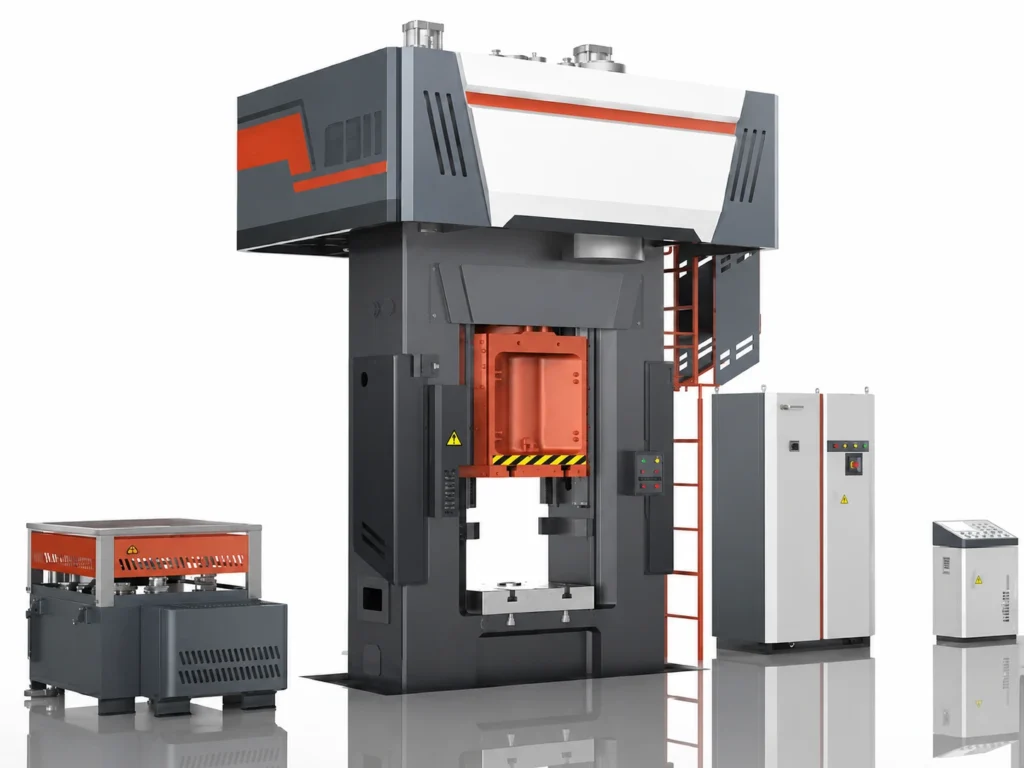
Electric Screw Press in a Forging Factory: Integration Guide
Installing an electric screw press in a forging factory involves more than choosing nominal machine capacity. The press must work with billet heating, material transfer, tooling, controls, foundations, operators and downstream equipment as one coordinated production system.
How Does an Electric Screw Press Fit into a Forging Factory?
The press forms the workpiece, but its performance depends on the processes before and after each stroke. Billets must arrive at the correct temperature and orientation, dies must be prepared and lubricated, and formed parts must leave the work area safely.
Start with the Forged Component
Factory Layout Considerations
Factory integration should begin with the component drawing, material, billet and forming sequence. These define the likely press requirement, tooling arrangement, handling method and supporting equipment.
Foundation and Installation Requirements
The layout should provide logical material flow from billet preparation through heating, transfer, forging, trimming and cooling. It must also allow safe operator access, die changes, maintenance, lifting and emergency escape routes.
Electrical Power and Utilities
The machine supplier should review floor loading, foundation design, anchor positions and installation clearances. Crane capacity, access doors and the route used to bring the press into the factory should be confirmed before delivery.
Heating and Billet Transfer
Available electrical supply, transformer capacity, compressed air, cooling water and lubrication services may affect the final configuration. Utility connection points should be coordinated with the equipment layout.
Dies and Process Development
Heating capacity and transfer time must match the press cycle. Excessive delay can change billet temperature and forming behaviour. Manual handling, mechanical feeders or robots should be selected according to billet size, temperature, orientation and output.
Controls and Line Coordination
Operator Safety and Access
Die design, forging stages, lubrication, ejection and material flow must be reviewed together. Trial production and process adjustment may be required before stable output is achieved.
A complete line may coordinate the heater, temperature monitoring, handling equipment, press, lubrication and downstream systems. Interlocks and safety controls should prevent equipment from operating in an unsafe or incorrect sequence.
Manual, Semi-Automatic or Automated Operation
Guarding, light curtains, emergency stops, safe loading zones and maintenance isolation are essential parts of the integration plan. The final system should comply with the requirements that apply at the installation location.
Preparing for Installation
Not every factory needs full automation. The suitable arrangement depends on production volume, product range, labour strategy, changeover frequency and the required level of process consistency.
Information to Send for an Integration Review
- Confirm the final factory layout
- Approve foundation and utility drawings
- Plan transport and lifting access
- Prepare electrical and service connections
- Confirm dies, billets and trial materials
- Train operators and maintenance personnel
- Agree commissioning and acceptance requirements
Frequently Asked Questions
Can an existing induction heater be used?
Possibly. Its frequency, power, coil design, billet range, output and controls must be checked against the proposed forging process.
Is a robot always required?
No. Manual or mechanical handling may be suitable for some applications. Robot selection depends on billet weight, temperature, orientation, transfer distance and cycle time.
When should the factory layout be finalised?
The layout should be reviewed early and finalised before foundations, utilities and handling interfaces are built.
Can the press be installed first and automation added later?
This can be possible if space, controls and interfaces are planned from the beginning. Retrofitting without early provision can be more difficult.
Who should be involved in the integration plan?
Production, tooling, maintenance, safety, facilities and equipment suppliers should review the project together.
Discuss Your Electric Screw Press Project
Send us your component drawing, material, billet dimensions, forging stages and required production rate for a technical review.
Electric Screw Press Solutions from Wiz Forging Machinery
Wiz Forging Machinery provides electric screw press and forging-line solutions for international manufacturers. Each enquiry is reviewed according to the component, material, process, output and factory requirements.