
Blog
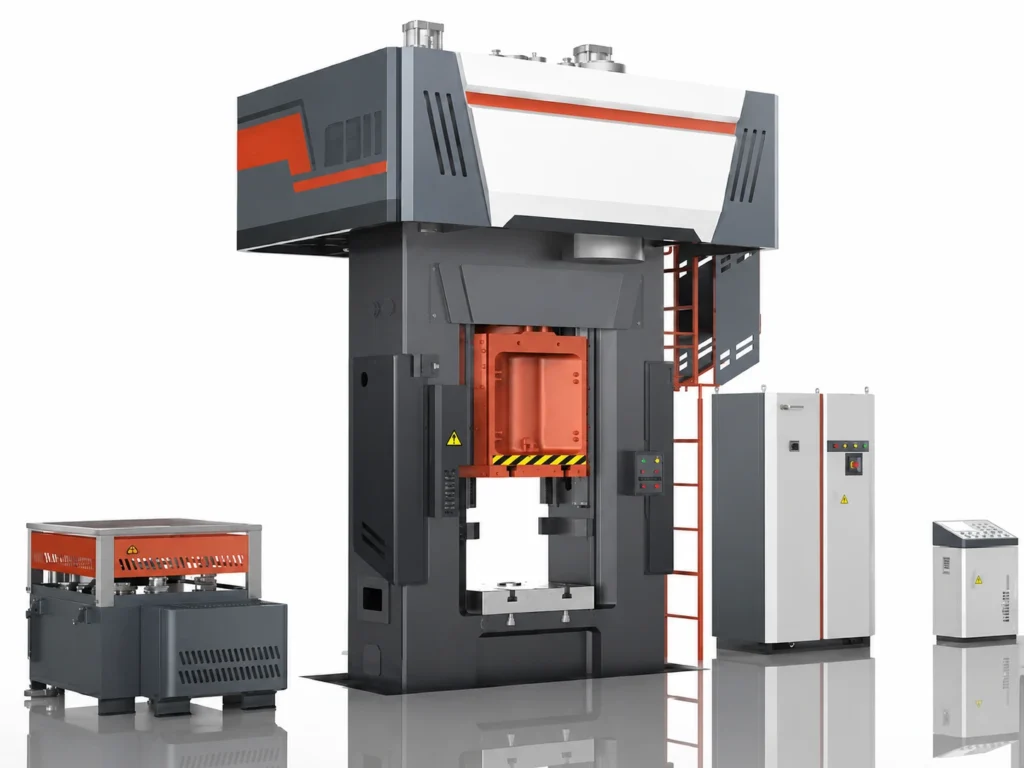
Electric Screw Press Forging Production: Process and Equipment
An electric screw press can form the central machine in a modern closed die forging process. Its electrically driven screw mechanism delivers controlled forming energy, while the surrounding production line manages billet preparation, heating, transfer, lubrication, trimming and downstream handling.
What Is Electric Screw Press Forging Production?
Electric screw press forging production uses an electrically driven screw press to apply forming energy to a prepared billet. The press converts motor-driven motion through a screw mechanism, moving the slide towards the workpiece and forming the material between the dies.
The press should not be selected by component weight alone. Material, billet dimensions, projected forging area, die design, forming stages, temperature and required output all affect the correct machine and line configuration.
Typical Stages in a Forging Production Line
Billet Preparation
- Billet cutting or other billet preparation
- Heating to the specified forging temperature
- Temperature checking before transfer
- Manual, mechanical or robotic loading
- Pre-forming and final forging operations
- Trimming, cooling and downstream handling
Heating and Temperature Control
Consistent billet dimensions and weight support a repeatable forging process. Cutting accuracy, surface condition and material identification should therefore be considered before the billet reaches the heating system.
Controlled Forming Energy
A suitable heating system prepares the billet for forming. Induction heating, temperature monitoring and rejection of billets outside the specified temperature range can help maintain process stability and protect the dies.
Repeatable Forging Quality
Different components and forming stages can require different energy settings. Controllable forming energy allows the process to be adjusted for pre-forming, blocking, finishing, sizing or calibration without relying on one fixed operating condition.
Automation Options
Repeatability depends on more than the press. Billet temperature, transfer time, die condition, lubrication and positioning must also remain controlled. A coordinated production line helps these variables work together.
Supporting Production Equipment
Die Design and Forging Stages
An electric screw press can operate as a standalone machine or as part of a semi-automatic or fully automated line. The appropriate level of automation depends on production volume, component geometry, billet temperature, transfer distance, orientation and cycle time.
- Billet cutting equipment
- Induction heating and temperature monitoring
- Automatic feeders or handling robots
- Die lubrication equipment
- Trimming equipment
- Conveyors, cooling and safety systems
Planning a Complete Forging Solution
The dies and forming sequence must be developed together with the press selection. The number of blows, material flow, flash arrangement, die life and ejection method all influence the production plan.
Information Needed for Press Selection
A complete solution should be assessed as one process rather than as a collection of separate machines. Equipment interfaces, controls, guarding, utilities, foundation requirements and operator access should be coordinated before installation.
Technical Review by Wiz Forging Machinery
- Finished component drawing and material
- Finished and trimmed component weight
- Billet dimensions and weight
- Forging temperature and projected area
- Number of forming stages or blows
- Required production rate
- Manual or automatic loading preference
- Factory layout, utilities and foundation conditions
Frequently Asked Questions
Can an electric screw press be added to an existing production line?
Yes, when the existing heater, handling equipment, controls, foundation and factory layout are compatible with the proposed press. A technical review is required before integration.
Can the press operate without automation?
Yes. Manual or semi-automatic operation may suit lower production volumes or flexible production. Safety, billet temperature and handling requirements still need to be assessed.
What information should be included in an enquiry?
Send the component drawing, material, billet size and weight, forging temperature, stages, required output and available factory layout.
Does every forging line need the same supporting equipment?
No. The correct equipment depends on the component, material, heating method, forming sequence, output and required level of automation.
Why is the complete process reviewed before press selection?
Because press capacity alone does not define a successful forging line. Heating, dies, transfer, controls and downstream operations must support the same production target.
Discuss Your Electric Screw Press Project
Send us your component drawing, material, billet dimensions, forging stages and required production rate for a technical review.
Electric Screw Press Solutions from Wiz Forging Machinery
Wiz Forging Machinery provides electric screw press and forging-line solutions for international manufacturers. Each enquiry is reviewed according to the component, material, process, output and factory requirements.