
Blog
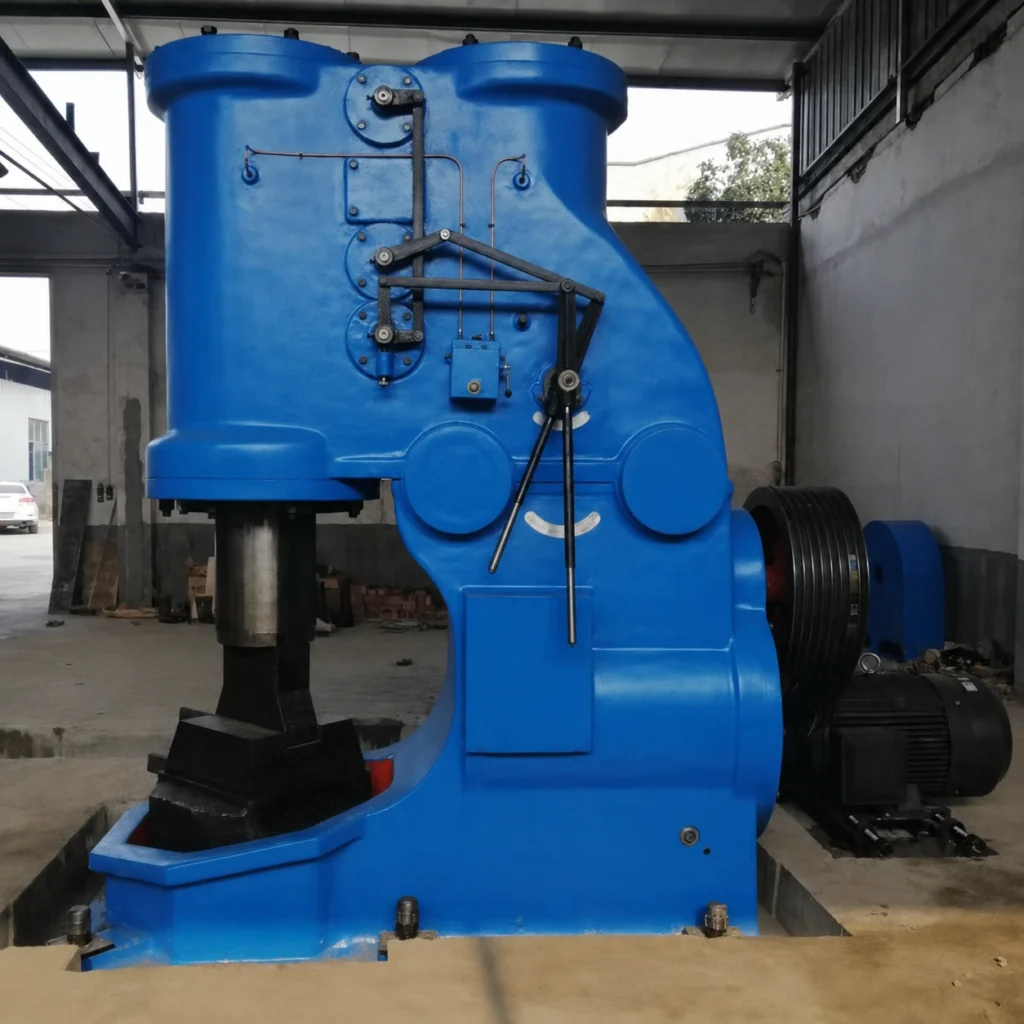
How to Choose the Right Pneumatic Forging Hammer
Choosing a pneumatic forging hammer requires more than selecting a nominal hammer size. The correct machine must match the starting billet, finished forging, material, required deformation, dies, handling method and production target.
This buyer’s guide explains the information needed for a reliable technical recommendation. You can compare available options on our pneumatic forging hammer machinery page.
Why Should Selection Start with the Forged Part?
The forged part determines the material flow, maximum section, workpiece length, number of operations and handling difficulty. Two components with the same finished weight may require different hammer capacities because their billet shapes, deformation and forging sequences differ.
Provide a finished drawing and, where available, a forging drawing or process sketch. Include tolerances and machining allowance so the technical review reflects the actual production route.
Which Factors Determine the Correct Hammer?
1. Material Grade
Carbon steel, alloy steel, stainless steel and other forgeable metals have different temperature ranges and resistance to deformation. State the exact grade rather than using only a general description such as “steel”.
The proposed heating and forging practice should be compatible with the material specification.
2. Billet Dimensions and Weight
Provide billet diameter or section, length and weight. These values influence heating capacity, handling, die contact and the amount of deformation required.
If several products will use the same hammer, identify the full minimum-to-maximum billet range.
3. Finished Dimensions and Forging Operations
Define whether the process includes drawing, upsetting, flattening, bending, punching, hot cutting or preforming. Each operation places different demands on the hammer and tooling.
Maximum workpiece length and section are also important for operator or manipulator access.
4. Production Rate
Required pieces per hour, shift or year affect the selection of heating equipment, handling method and line layout. Hammer size alone does not determine output.
Include expected reheating, die changes, material transfer and inspection when estimating the production cycle.
5. Dies and Tooling
Flat dies support general forging, while fullering, swaging, cutting and custom dies are used for specific operations. Confirm the die dimensions, fixing arrangement and tooling scope.
Tooling should be designed around the part and should provide safe access for handling.
6. Workpiece Handling
Pneumatic Forging Hammer Selection Checklist
Small workpieces may be handled with tongs, whereas heavier or longer forgings may require a manipulator, crane or lifting device.
Handling capacity, gripping diameter, rotation, travel and coordination with the hammer must match the heaviest workpiece.
| Selection Area | Information to Provide | Why It Matters |
|---|---|---|
| Product | Drawing, dimensions and weight | Defines the required forging work |
| Material | Exact grade and forging temperature | Affects deformation resistance |
| Billet | Starting size and weight | Determines heating and handling |
| Process | Forging operations and heats | Defines tooling and capacity |
| Output | Pieces per hour, shift or year | Sizes the complete production line |
| Factory | Power, layout and foundation data | Confirms installation feasibility |
How Should Capacity Be Compared?
Compare the manufacturer’s full technical specification and recommended workpiece range. Relevant data can include falling-part or ram mass, blow characteristics, motor, die dimensions, working space, machine dimensions and installation requirements.
Do not assume that similarly named models from different suppliers have identical capacity. The recommendation should be supported by an application review.
What Supporting Equipment May Be Required?
The project may require billet cutting, furnace or induction heating, temperature measurement, dies, a manipulator, cooling racks, inspection equipment and safety controls. Existing equipment can be considered if its capacity and interfaces are compatible.
The layout must allow efficient hot-material transfer, die maintenance, operator access and a safe separation between forklifts, cranes and forging operations.
What Factory and Commercial Information Is Needed?
Provide voltage, frequency, available electrical power, installation area, ceiling height, floor and soil information, local vibration constraints and the preferred delivery scope. State whether you need foundation drawings, tooling, commissioning, operator training and spare parts.
A quotation should clearly identify included equipment, technical assumptions, exclusions, delivery terms, lead time, warranty and service scope.
Frequently Asked Questions
Can hammer size be chosen from finished weight alone?
No. Material, billet size, geometry, deformation, dies, workpiece handling and output must also be reviewed.
Should I select extra capacity?
A reasonable engineering margin may be appropriate, but excessive oversizing can increase investment and installation requirements. The margin should follow the application assessment.
What if I produce several different parts?
Provide the full product range and identify the most demanding billet, section, weight and operation. Tool changes and setup time should also be considered.
Do I need a manipulator?
A manipulator is normally considered when workpieces are too heavy, hot, long or repetitive for safe and efficient manual handling.
Can existing heating equipment be used?
Possibly, if its billet range, heating rate, temperature control and discharge position are compatible with the selected hammer and output.
What documents should accompany an enquiry?
Send drawings, material, billet and weight data, process steps, output target, factory utilities, layout and required supply scope.
Technical Selection Review and Quotation
Wiz Forging Machinery selects pneumatic forging hammers from application data rather than a model name alone. The review can include the hammer, dies, heating, handling and installation requirements.
Send your component drawing, material, billet dimensions and production target. Request a quotation or review our pneumatic forging hammer range.