
Blog
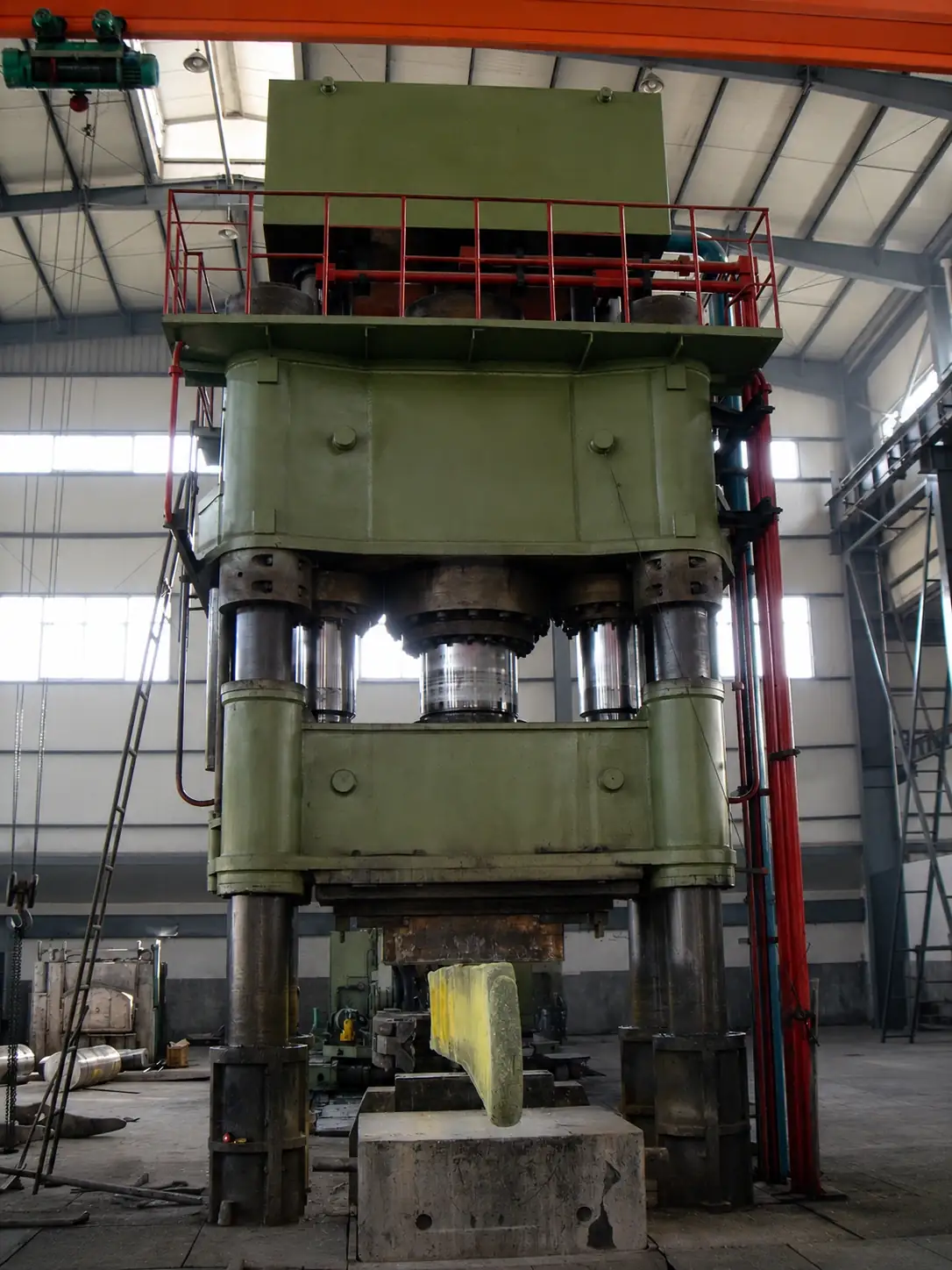
Hydraulic Press for Steel Billet and Alloy Forging
A hydraulic press for steel billet forging must be selected around the exact grade, billet size, temperature and deformation route. Different steels can require substantially different forces and temperature control even when the final components are similar.
See reference machine specifications on the Hydraulic Open Die Forging Press machinery page.
Why Steel Grade Matters
Chemical composition and microstructure affect heating practice, flow stress, cracking risk and cooling. The enquiry should state the recognised material designation and any customer-specific specification.
Technical and Production Considerations
Carbon and Low-Alloy Steels
These materials cover many shafts, rings, discs and machinery components. Process planning should consider section size, required mechanical properties, heat treatment and inspection standards.
Stainless and High-Alloy Steels
Stainless and high-alloy grades can have narrower working ranges or higher deformation resistance. Accurate temperature control and suitable press force are important, particularly for large contact areas.
Tool Steel and High-Strength Materials
Tool steels may require careful heating, controlled reductions and protection against excessive temperature loss. The forging route should reflect the grade, ingot condition and required internal quality.
Billet Dimensions and Weight
Provide diameter or section, length, weight and tolerances. The largest hot dimensions determine press clearance and manipulator jaw range, while billet volume must cover the final forging and allowances.
Heating and Temperature Measurement
Furnace type, heating rate, soak time and transfer should suit the material and section. Infrared measurement can support process control, but emissivity, scale and viewing conditions should be considered.
Planning the Complete Forging Process
Force Calculation
Press force depends on material resistance at temperature, tool contact area, reduction and friction. Calculations should examine the highest-load stage rather than using a general force-per-tonne assumption.
Scale, Lubrication and Tool Condition
Oxide scale can affect surface quality and tool contact. Descaling, tool cleaning and appropriate lubrication may be included according to the product and process. Tools should be inspected for wear and damage.
Handling and Reheating
Heavier billets require powered handling. Transfer distance and manipulator speed affect temperature loss. Large forgings may return to the furnace several times before the sequence is complete.
Quality Requirements
Specify dimensional tolerances, machining allowance, heat treatment, mechanical properties, ultrasonic acceptance and traceability. These requirements influence the forging route and supporting inspection equipment.
Frequently Asked Questions
Can one hydraulic press forge different steel grades?
Yes, provided force, temperature control, tooling and process settings cover the required grades and product sizes.
Why must the exact steel designation be supplied?
Material designation determines heating range, deformation resistance, cracking risk and subsequent heat treatment.
How is the billet size selected?
Billet volume is calculated from the forging, machining allowance, flash or process allowance where applicable, and expected scale loss.
Do steel billets need descaling?
Descaling may be beneficial where oxide scale affects surface quality, tool contact or downstream requirements.
What inspection information is needed?
Provide dimensional, surface, ultrasonic, mechanical-property, heat-treatment and traceability requirements.
What information should be provided for a quotation?
Provide the finished-part and forging drawings, material specification, billet dimensions and weight, maximum hot-workpiece dimensions, required operations, production target, heating method, handling requirements, factory voltage, available space and foundation information.
Technical Review and Quotation
A reliable recommendation requires the material specification and full process route. Generic references to “steel” are not sufficient for force, heating or tooling decisions.
Wiz Forging Machinery can review the application and recommend a suitable press and supporting equipment.