
Blog
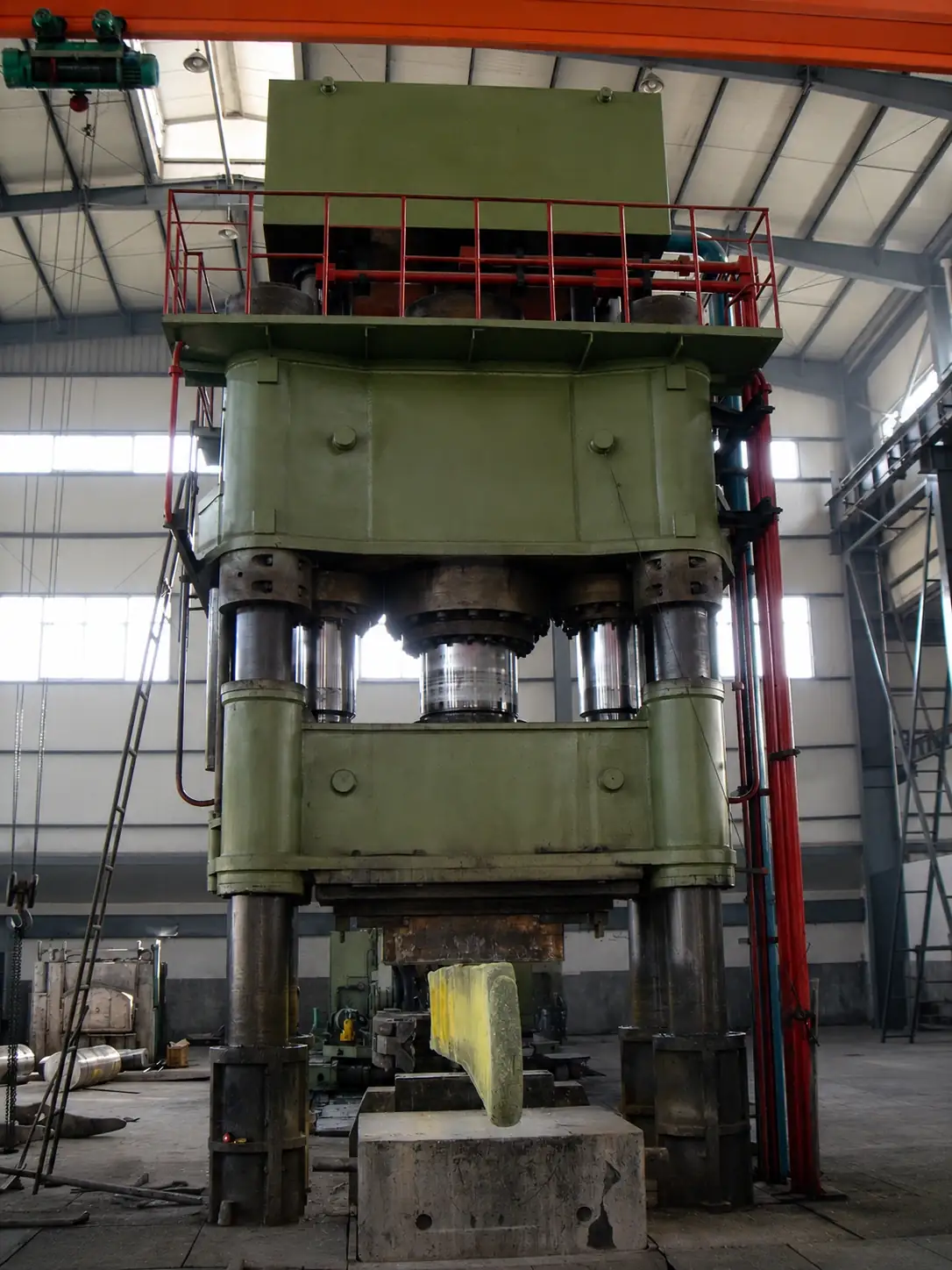
Open Die Forging Press for Shafts, Axles, Rings and Discs
An open die forging press for shafts must control reduction along the workpiece while allowing repeated feeding and rotation. The same equipment can also prepare axles, rings, discs and hollow components when force, tooling and handling are matched to the product.
Review reference equipment on the Hydraulic Open Die Forging Press machinery page.
Why Open Die Pressing Suits Shaft Production
Long products are developed through successive local reductions rather than one complete die impression. This allows different lengths, diameters and shoulder positions to be forged with adaptable tooling and programmes.
Technical and Production Considerations
Starting Billet and Material Data
Selection begins with billet diameter, length, weight, material grade and temperature. The starting stock must contain enough volume for the finished geometry, machining allowance and expected scale loss.
Upsetting Before Drawing
Local or full upsetting may be used to redistribute material before drawing. The sequence should avoid excessive slenderness and support the required internal working. Tool contact and end restraint affect material flow.
Drawing-Out Long Shafts
Drawing-out uses overlapping bites along the axis. Bite length, reduction, feed increment and rotation angle influence section uniformity and surface quality. The manipulator should maintain alignment throughout the pass.
Forming Shoulders and Steps
Fullers, offset tools or controlled local reductions can create stepped sections and shoulders. Transition radii and machining allowances should be defined on the forging drawing before tooling is finalised.
Ring and Disc Preforms
Billets can be upset into discs, pierced and expanded on mandrels, or prepared for ring rolling. Preform dimensions must suit the next operation and provide suitable material distribution around the circumference.
Planning the Complete Forging Process
Press Force, Daylight and Stroke
Force is checked for the largest contact area and material resistance. Daylight must accommodate the billet, tools and manipulator jaws. Stroke should allow approach, reduction and safe clearance at every stage.
Manipulator Requirements
Specify maximum weight, length, diameter, rotation requirements and jaw range. Long shafts can create significant bending moments, so capacity should be reviewed beyond a simple payload figure.
Dimensional and Quality Control
Process checks can include diameter, length, straightness, temperature and surface inspection. Final requirements may include ultrasonic testing, mechanical tests and machining allowance confirmation.
Production-Line Integration
The line may include billet cutting, furnace heating, transfer, press, manipulator, measuring equipment and cooling. Layout should minimise hot transfer time and provide adequate length for the longest workpiece.
Frequently Asked Questions
What shaft sizes can an open die press produce?
The range depends on press force, daylight, stroke, tooling, manipulator capacity and starting billet dimensions.
Why is the shaft rotated between press strokes?
Rotation distributes deformation around the section and helps develop a uniform round or polygonal profile.
Can the same press make rings and discs?
Yes, when its force, tooling, clearances and handling equipment suit the upsetting, piercing or mandrel-forging stages.
What information is needed for stepped shafts?
Provide finished and forged drawings showing all diameters, lengths, shoulders, radii and machining allowances.
Is a manipulator essential for long shafts?
It is generally required for heavy or long workpieces because it maintains support, feed and rotation during forging.
What information should be provided for a quotation?
Provide the finished-part and forging drawings, material specification, billet dimensions and weight, maximum hot-workpiece dimensions, required operations, production target, heating method, handling requirements, factory voltage, available space and foundation information.
Technical Review and Quotation
Shaft and ring projects should be assessed from the complete forging sequence. Workpiece geometry, bite planning, manipulation and inspection are as important as nominal press force.
Wiz Forging Machinery can review the application and recommend a suitable press and supporting equipment.