
Blog
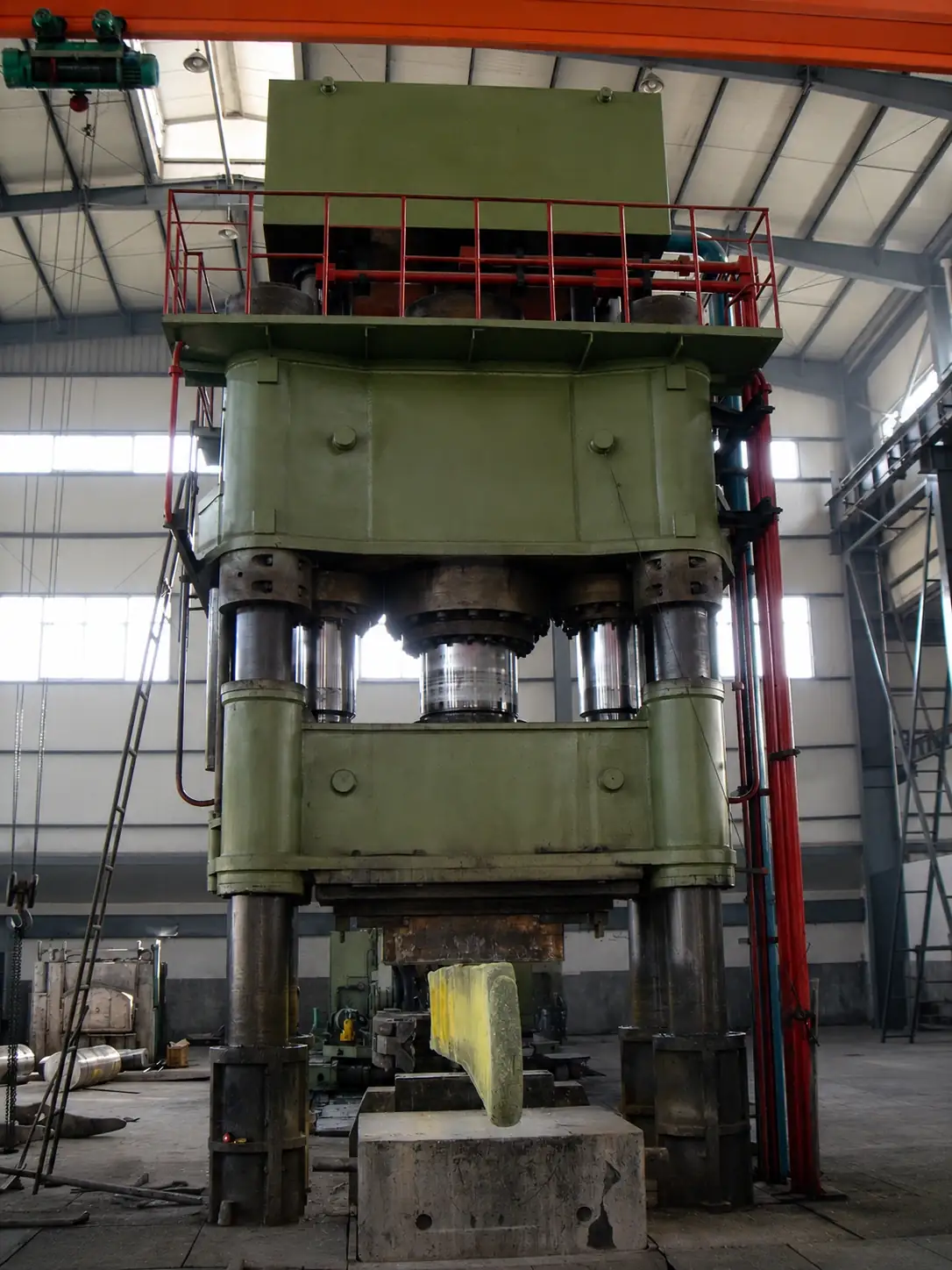
Open Die Forging Press with Manipulator: Integrated Operation
An open die forging press with manipulator combines controlled hydraulic deformation with powered workpiece lifting, feeding and rotation. For large billets and long shafts, the manipulator is not simply an accessory: its capacity and movement range directly affect how the press can be used.
Reference press configurations are available on the Hydraulic Open Die Forging Press machinery page.
Why Integrate a Forging Manipulator?
Heavy hot workpieces cannot be positioned accurately or safely using manual tongs. A manipulator supports the billet, grips it securely and provides controlled movement between strokes. This reduces uncontrolled handling and allows the forging sequence to use repeatable bite lengths and rotations.
Technical and Production Considerations
Core Manipulator Movements
- Forward and reverse travel
- Clamp opening and closing
- Workpiece lifting and lowering
- Axial rotation
- Clamp-head adjustment or inclination where specified
- Side movement or steering according to design
Coordinating Press and Manipulator Motion
The press slide must provide enough clearance before the manipulator advances or rotates the billet. Interlocking can prevent unsafe movement while the tools are engaged. In automatic or assisted cycles, the control system coordinates slide position, workpiece movement and the next pressing command.
Selecting Manipulator Capacity
Capacity should cover the heaviest workpiece at every stage, including the starting billet, tooling interface and any eccentric loading. Buyers should specify maximum weight, diameter, length, temperature and centre-of-gravity range rather than relying only on finished weight.
Clamp and Jaw Selection
Jaw form should suit the expected sections and allow secure gripping without obstructing the forging operation. Round billets, shafts, rectangular blocks and irregular preforms can require different jaw profiles or replaceable inserts.
Travel, Reach and Operating Envelope
The manipulator must reach the furnace, press centre and any inspection or transfer positions. Its travel should be checked against the press daylight, table position, building columns and maintenance areas. A layout drawing is therefore required early in the project.
Planning the Complete Forging Process
Manual, Assisted and Automatic Operation
Manual joystick control offers flexibility for one-off work. Assisted modes can apply stored movement increments or rotation angles. Higher automation can coordinate repeat sequences, although the appropriate level depends on product variety, process stability and investment objectives.
Foundation and Rail Arrangement
Rail-mounted units require accurately aligned rails and foundations capable of supporting dynamic loads. The press and manipulator centre lines must be coordinated. Cable, hose and service routing should remain protected throughout travel.
Safety and Operator Visibility
The operating position should provide a clear view of the billet, dies and jaw engagement. Emergency stops, motion limits, alarms and interlocks should cover both machines. Procedures must address loss of grip, hydraulic faults and emergency withdrawal.
Information Needed for Integration
Supply the product and forging drawings, billet range, weight at each stage, required movements, furnace and press positions, target cycle, available floor area and preferred control level. Existing equipment interfaces should be documented with dimensions and control details.
Frequently Asked Questions
What does a forging manipulator do?
It grips, lifts, feeds and rotates hot billets or forgings so they can be positioned accurately between press strokes.
How is manipulator capacity selected?
Selection uses maximum hot-workpiece weight, dimensions, centre of gravity, jaw design, required reach and motion range.
Can the press and manipulator operate automatically?
Yes, selected movements and press cycles can be coordinated, subject to process stability and the required automation level.
Does the manipulator need its own foundation?
Usually yes. Rail alignment, dynamic loads and the relationship to the press centre line must be included in the foundation design.
Can one manipulator handle different products?
It can handle a defined range when its capacity, jaws, travel and rotation meet every product requirement.
What information is required for a technical quotation?
Please provide the component and forging drawings, material grade, billet dimensions and weight, maximum workpiece dimensions, forging operations, target output, heating method, required handling method, factory voltage, installation space and foundation information. This allows the press and supporting equipment to be assessed together.
Technical Review and Quotation
A press and manipulator should be selected as one system. A mismatch in weight capacity, reach, jaw design or movement speed can restrict production even when the hydraulic press itself is correctly sized.
Wiz Forging Machinery can review the process and recommend a suitable press, manipulator and auxiliary-equipment configuration.