
Blog
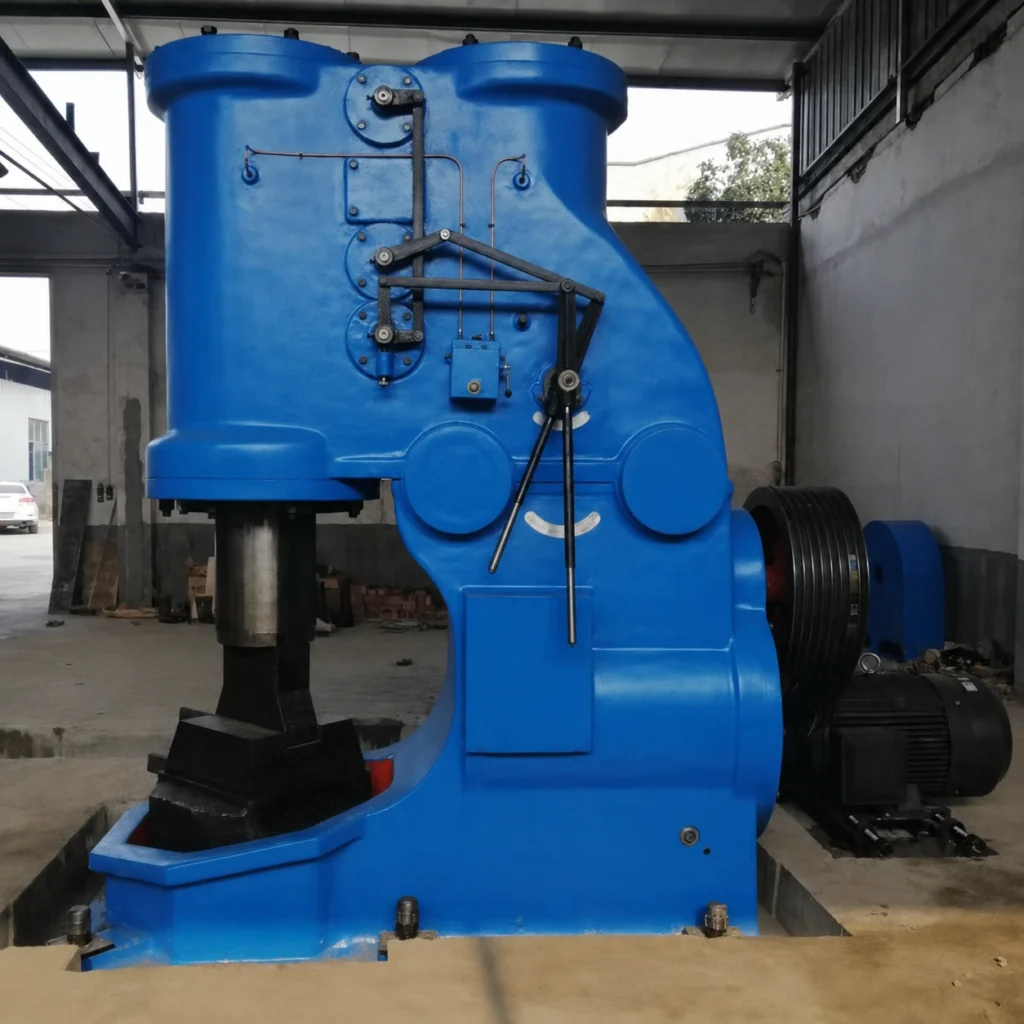
Pneumatic Forging Hammer Applications and Forging Operations
Pneumatic forging hammers are used for open die forging operations that require repeated controlled impact and flexible workpiece repositioning. Their applications range from toolmaking and repair work to industrial production of shafts, rings, discs, bars and preforms.
The correct application range depends on hammer capacity, billet temperature, material, dies and handling equipment. See our pneumatic forging hammer solutions for machinery information.
Which Forging Processes Can a Pneumatic Hammer Perform?
The machine can support drawing-out, upsetting, flattening, fullering, swaging, bending, punching, chiselling and hot cutting when configured with suitable dies and tools. It may also be used for preliminary forming before another forging or machining stage.
Each operation changes the metal in a different way. Process planning should define material flow, number of heats, workpiece orientation and the dimensional allowance required for subsequent machining or finishing.
What Are the Main Pneumatic Forging Hammer Applications?
1. Shafts and Stepped Bars
Drawing operations can reduce and extend heated stock to produce straight or stepped shaft forms. The operator or manipulator rotates and feeds the workpiece to distribute deformation.
Starting billet size, final section, length and straightness allowance influence machine and handling selection.
2. Rings and Discs
Upsetting, punching and expansion operations can prepare rings, discs and similar circular forgings. Some parts may continue to a ring rolling or machining stage.
The process route should identify the required blank dimensions and whether separate piercing or ring-forming equipment is needed.
3. Agricultural and Hand Tools
Pneumatic hammers can form suitable tool blanks, agricultural implements and hardware components through drawing, flattening, bending and local shaping.
Tooling should be designed for the required profile, production quantity and finishing allowance.
4. Repair and Maintenance Forgings
Workshops may use a flexible open die hammer to manufacture or repair one-off and small-batch components. The ability to reposition the workpiece supports varied geometries.
Material identification and a controlled heating practice remain important even when output is low.
5. Preforms for Subsequent Operations
A pneumatic hammer can prepare a billet or preform before closed die forging, ring rolling, machining or another forming stage, subject to the required accuracy and production route.
The preform must provide the correct volume distribution for the downstream process.
6. Industrial Open Die Forgings
Application Guide by Forging Operation
Heavier hammer configurations can support larger billets and industrial workpieces when paired with suitable heating, dies, manipulators and foundations.
The project should be assessed as a complete line because handling and reheating often determine practical productivity.
| Operation | Material Change | Example Purpose |
|---|---|---|
| Drawing-out | Reduces section and increases length | Shafts, bars and stepped sections |
| Upsetting | Increases section and reduces length | Heads, discs and flange preforms |
| Flattening | Reduces thickness | Tool and plate-like blanks |
| Fullering | Moves material away from a local area | Prepare shoulders or transitions |
| Punching | Creates an opening in hot stock | Ring blanks and holes |
| Bending | Changes workpiece direction | Curved tools and components |
| Hot cutting | Separates or trims heated stock | Billet division and excess removal |
Actual tooling and sequences depend on the component drawing and material.
Which Materials Can Be Forged?
Pneumatic forging hammers may process suitable carbon steels, alloy steels, stainless steels and other forgeable metals. Different grades require different temperature ranges, deformation rates and reheating practices.
Material grade must be confirmed before machine selection. A hammer suitable for one component does not automatically suit another alloy or section, even when the finished weights are similar.
How Are Applications Integrated into a Production Line?
A production line may include saw or shear billet cutting, furnace or induction heating, temperature control, tongs or manipulators, dies, the hammer, cooling and inspection. Ring or disc production may require downstream piercing, ring rolling or machining.
The layout should minimise unsafe or excessive transfer distance while allowing maintenance access, die handling and a clear flow of hot and finished workpieces.
What Should Buyers Provide for an Application Assessment?
Provide part drawings, annual or hourly quantity, material specification, starting billet dimensions, finished dimensions, maximum workpiece weight, forging operations and available heating equipment. Include photographs of current production where useful.
For larger parts, provide manipulator requirements, maximum gripping diameter, workpiece length and the required rotation or travel. Factory layout and utility information are also needed.
Frequently Asked Questions
What products can a pneumatic forging hammer make?
Suitable products can include shafts, bars, rings, discs, tools, hardware, repair parts and preforms. Final suitability depends on the exact component and process.
Can it make closed-die parts?
The machine is principally associated with open die and free forging. Specialised closed-die production should be assessed separately against part accuracy, dies and production rate.
Is it suitable for small batches?
Yes. Its flexible workpiece handling can suit one-off and small-batch production, provided the machine capacity and tooling match the work.
Can it be used before ring rolling?
It may prepare suitable punched or upset ring blanks before ring rolling. The preform dimensions must match the downstream ring-rolling process.
Does every application need custom dies?
General operations may use standard flat or shaped dies. Components with specific profiles or repeated production may benefit from application-specific tooling.
How is output estimated?
Output depends on workpiece size, heating and reheating time, handling, number of forging operations, operator method and inspection requirements.
Technical Application Review and Quotation
Wiz Forging Machinery evaluates whether a pneumatic forging hammer is appropriate for the proposed part, material and production method, then reviews the hammer, dies, heating and handling scope together.
Send your drawings, billet data, material and production target for assessment. Request a quotation or view the pneumatic forging hammer range.