
Blog
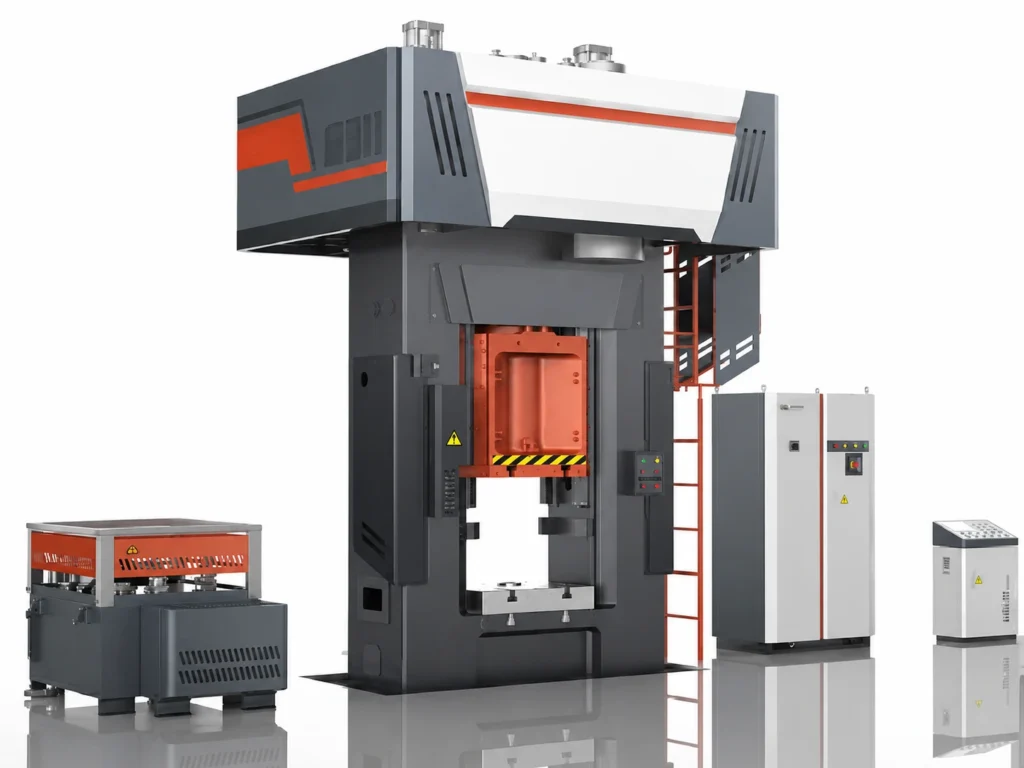
Electric Screw Press for Hot Forging: Machine Selection
Hot forging forms heated material through one or more operations. An electric screw press may be suitable when its forming energy, dies, heating system and production configuration are matched to the component, material and required output.
How Is an Electric Screw Press Used for Hot Forging?
The press moves the slide through an electrically driven screw mechanism and applies forming energy to the heated billet between the dies. The process may include pre-forming, blocking, finishing, sizing or calibration.
Start with the Component and Material
Machine selection begins with the finished component drawing, material specification and required properties. Geometry, tolerances, machining allowances and production volume help define the proposed forging route.
Why Component Weight Is Not Enough
Finished weight does not show projected forging area, material flow, die loading or the energy required at each stage. Billet dimensions, temperature, number of blows and die arrangement must also be reviewed.
Billet Preparation
Consistent billet dimensions and weight support a stable hot forging process. Cutting accuracy, identification, surface condition and storage should be considered before heating.
Heating and Temperature Monitoring
The heating system must bring the billet into the specified forging range at the required production rate. Temperature monitoring can help identify billets that are too hot or too cold before they reach the dies.
Transfer Time and Loading
The distance and time between heating and forging affect billet temperature. Manual handling, feeders or robots should be selected according to billet weight, temperature, orientation, cycle time and factory layout.
Dies and Forming Stages
Die design should account for material flow, flash, radii, draft, lubrication, ejection and expected life. Complex parts may need pre-forming before the final cavity is filled.
Controllable Forming Energy
Different stages can require different energy settings. A controllable process can support repeatable production and reduce unnecessary impact, but results still depend on the complete hot forging system.
Manual, Semi-Automatic or Automated Lines
The appropriate operating method depends on output, product range, labour strategy, safety and changeover requirements. Full automation is not necessary for every hot forging application.
Supporting Equipment
- Billet cutting equipment
- Induction or other suitable heating system
- Temperature monitoring
- Feeders or handling robots
- Die lubrication equipment
- Trimming equipment
- Cooling and downstream conveyors
- Control and safety systems
Technical Information Needed
- Finished component drawing and material
- Finished and trimmed weight
- Billet dimensions and weight
- Forging temperature
- Projected forging area
- Number of stages or blows
- Die concept
- Required production rate
- Loading and automation requirements
- Factory utilities and layout
Selecting a Hot Forging Solution
Press selection should be based on the complete hot forging process, including the component, material, billet, forming stages, dies, heating method, handling arrangement and production target.
Frequently Asked Questions
Is every electric screw press suitable for hot forging?
Suitability depends on the machine’s energy range, component, material, billet, dies, temperature and production requirements. A technical review is necessary.
Can a hot forging line be automated?
Yes. Heating, temperature checking, billet transfer, forging, lubrication, trimming and downstream handling can be coordinated where the application supports automation.
How is the correct press capacity determined?
Capacity is assessed from projected area, material, billet, geometry, forming stages, temperature, dies and required output, not component weight alone.
Can the press operate as a standalone machine?
Yes, for suitable applications. The loading method, safety controls and surrounding process still need to be planned.
What should be provided for a quotation?
Provide the component drawing, material, billet dimensions and weight, forging temperature, forming sequence, output target and factory information.
Discuss Your Electric Screw Press Project
Send us your component drawing, material, billet dimensions, forging stages and required production rate for a technical review.
Electric Screw Press Solutions from Wiz Forging Machinery
Wiz Forging Machinery provides electric screw press and forging-line solutions for international manufacturers. Each enquiry is reviewed according to the component, material, process, output and factory requirements.