
Blog
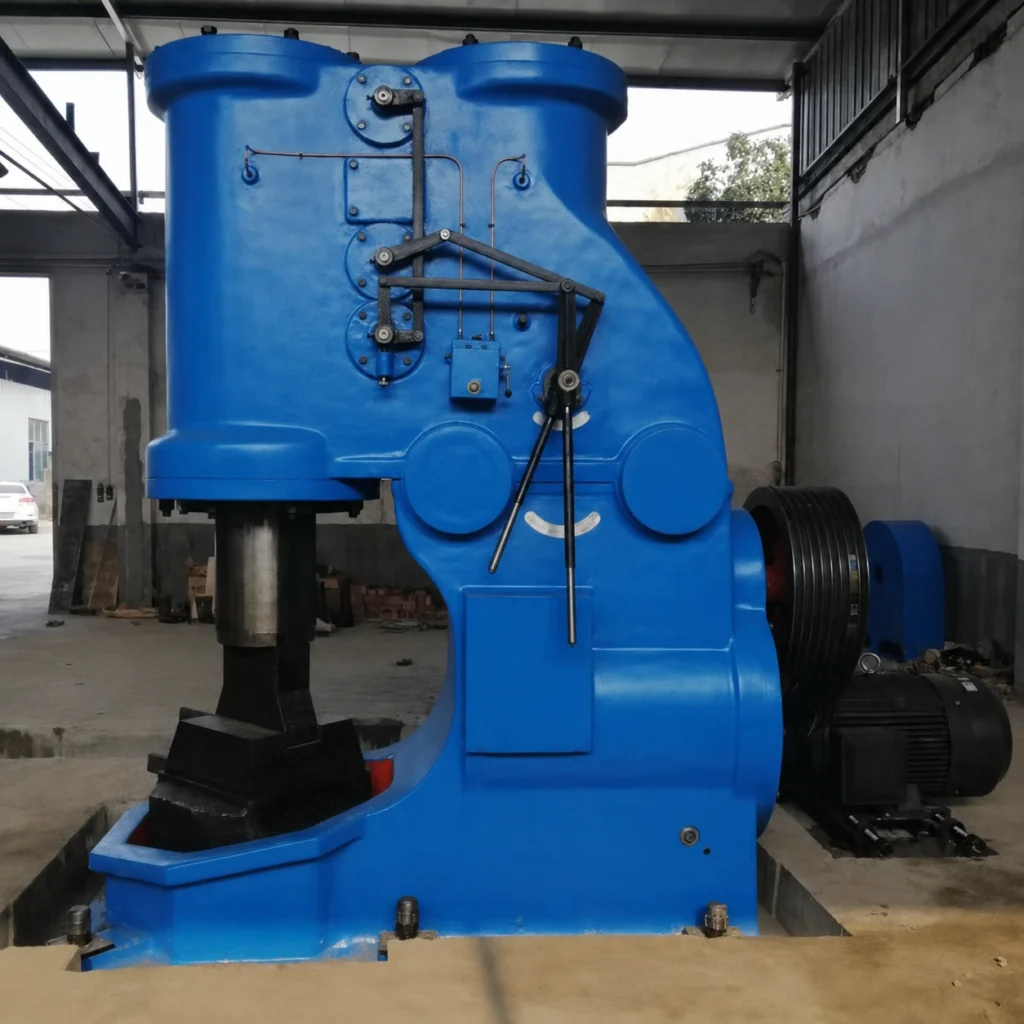
Pneumatic Forging Hammer vs Hydraulic Forging Hammer
Pneumatic and hydraulic forging hammers both shape heated metal through repeated impact, but they create and control that impact through different operating systems. The correct choice depends on workpiece size, required energy, process control, production volume, utilities, installation and service capability.
This comparison focuses on technical selection rather than claiming that one hammer type is always superior. For pneumatic equipment, review our pneumatic forging hammer range.
How Do Pneumatic and Hydraulic Forging Hammers Differ?
A pneumatic forging hammer uses a motor-driven compressor and working-cylinder system to move its ram. It is a self-contained design commonly selected for flexible open die forging across workshop and industrial applications.
A hydraulic forging hammer uses a hydraulic power and control system to raise and accelerate the ram. Hydraulic designs may be configured for open die or closed die production and can offer different control, energy and automation characteristics depending on the machine.
Which Technical Areas Should Buyers Compare?
1. Drive and Energy System
Pneumatic hammers generate working air through their internal compressor and working cylinders. Hydraulic hammers use pumps, valves, accumulators or related hydraulic equipment according to the design.
The drive affects utilities, controls, maintenance and the machine’s energy characteristics.
2. Forging Application
Pneumatic hammers are strongly associated with open die and free forging, including drawing, upsetting and general workshop work. Hydraulic hammers may serve open die or specialised closed die applications.
The workpiece and forming process should define the machine category before quotations are compared.
3. Blow Control and Repeatability
Both technologies can provide controlled hammering, but the control range and repeatability depend on the specific design. Hydraulic control may support advanced programmable functions on suitable machines.
Buyers should request control descriptions and performance data for the actual model rather than generalising from the drive type.
4. Installation and Utilities
Both machines require a suitable foundation and vibration assessment. Pneumatic hammers require electrical power for their motor-driven system, while hydraulic machines also require space and services for the hydraulic power arrangement.
Oil cooling, ambient conditions, electrical capacity and maintenance access may be relevant to a hydraulic installation.
5. Maintenance Requirements
Pneumatic systems require attention to cylinders, seals, guides, lubrication, drives and die fixing. Hydraulic systems add pumps, valves, accumulators, filters, hoses, seals and oil-condition management.
Maintenance competence, spare parts and response time should be evaluated with the purchase price.
6. Automation and Handling
Pneumatic vs Hydraulic Forging Hammer Comparison
Either technology can be integrated with heating, manipulators and material handling when the machine and controls are designed for it.
Automation scope should match billet weight, transfer sequence, takt time, workpiece orientation and safety requirements.
| Area | Pneumatic Forging Hammer | Hydraulic Forging Hammer |
|---|---|---|
| Operating medium | Internally generated working air | Hydraulic fluid and power unit |
| Common application | Open die and general free forging | Open die or closed die, by design |
| Control | Operator-controlled pneumatic action | Hydraulic control, potentially programmable |
| Supporting system | Integrated compressor and working mechanism | Hydraulic power, filtration and cooling arrangement |
| Maintenance focus | Cylinders, seals, guides and drive | Hydraulics, controls, fluid condition and seals |
| Selection basis | Part, billet, material, process, energy, output and factory conditions | |
When May a Pneumatic Forging Hammer Be Suitable?
A pneumatic hammer may be suitable for flexible open die production, varied workpieces, toolmaking, repair operations and factories that want a self-contained hammering mechanism. It can be considered where operator-controlled repeated blows and workpiece repositioning match the process.
The hammer capacity, tooling and manipulator requirements still need to be confirmed from actual project data.
When Should a Hydraulic Hammer Be Evaluated?
A hydraulic hammer should be evaluated when the project requires the energy range, control functions, production scale or automated operation offered by a suitable hydraulic design. It may also be considered for heavy open die forging or dedicated closed die production.
Hydraulic-machine selection requires a detailed review of the power unit, controls, cooling, foundation, oil management and maintenance support.
What Information Is Needed for an Objective Comparison?
Provide component and forging drawings, material grade, billet and finished weights, maximum dimensions, forging stages, required energy or existing process data, hourly output and automation requirements.
Also provide layout, electrical supply, ambient conditions, foundation information, handling method and expectations for installation, commissioning and spare parts. Quotations should use the same technical scope.
Frequently Asked Questions
Which hammer is better?
Neither technology is universally better. The correct choice depends on the component, process, capacity, control, utilities, maintenance and investment requirements.
Is a pneumatic hammer only for small work?
No. Pneumatic hammers cover workshop and industrial capacities. Suitability depends on the selected configuration and workpiece range.
Does a hydraulic hammer provide better control?
Some hydraulic designs offer advanced control and programming, but buyers should compare the actual machine specifications and required process.
Do both need a foundation?
Yes. Repeated impact must be supported and transmitted through an engineered foundation suited to the machine and site.
Can both work with manipulators?
Yes, when the hammer, manipulator, controls and layout are engineered for the workpiece and forging sequence.
What should be compared in quotations?
Compare capacity, energy, controls, tooling, utilities, foundation, auxiliaries, handling, delivery scope, commissioning, warranty and service.
Technical Hammer Comparison and Quotation
Wiz Forging Machinery can review pneumatic and hydraulic hammer options against the same component and factory data. This helps identify the machine type and supporting equipment that fit the actual forging process.
Send your drawings, billet, material and output requirements for evaluation. Request a quotation or view our pneumatic forging hammer machinery.