
Blog
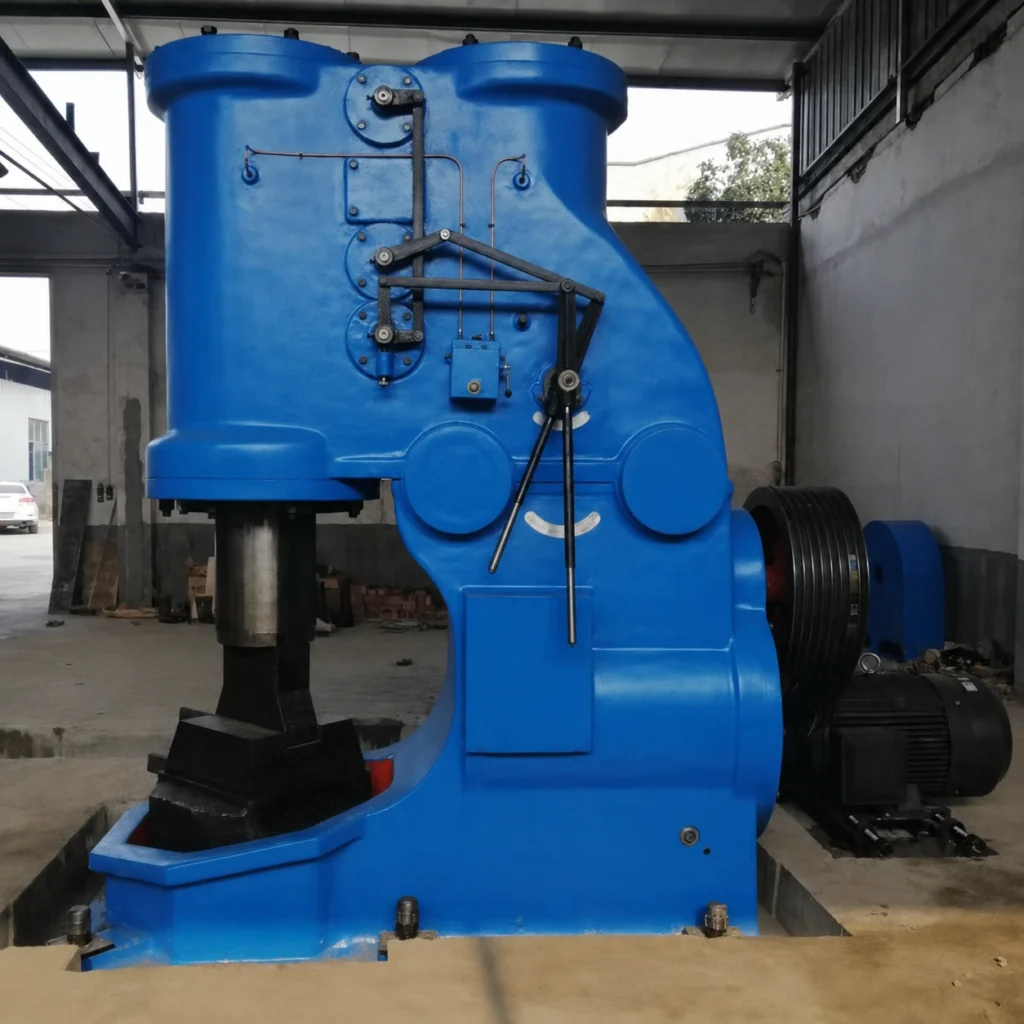
Complete Pneumatic Forging Hammer Production Line
A pneumatic forging hammer reaches its practical production capacity only when billet preparation, heating, handling, tooling and downstream operations are coordinated around it. Buying the hammer without reviewing the complete process can create delays, temperature loss and handling problems.
This guide explains the main stages of an open die forging line. See the central pneumatic forging hammer machinery and available configuration support.
What Is Included in a Pneumatic Hammer Forging Line?
A complete line may include raw-material storage, billet cutting, furnace or induction heating, temperature checking, hot-material transfer, the pneumatic hammer, dies, tongs or a manipulator, cooling, cleaning, inspection and control systems.
The exact scope varies by component and output. A flexible workshop line may use manual handling, whereas heavier or higher-output production may require mechanised transfer and a forging manipulator.
Which Stages Must Be Coordinated?
1. Billet Cutting and Preparation
Bars or stock are cut to a controlled billet length and weight. Consistent billet volume helps achieve repeatable material flow and reduces unnecessary trimming or machining.
Cutting equipment should match material grade, section range and required output.
2. Heating System
Billets must reach a suitable and reasonably uniform forging temperature. Gas furnaces, electric furnaces or induction heaters may be considered according to material, billet size and production requirements.
Heating capacity should include transfer time, reheating and the intended line rhythm.
3. Temperature Monitoring and Transfer
Temperature checking helps identify billets that are too cold or outside the planned range. Transfer equipment should move hot stock to the hammer without excessive delay.
Tongs, conveyors, robots, manipulators or lifting devices may be used depending on billet size and layout.
4. Hammer, Dies and Tooling
The pneumatic hammer provides repeated impact while the dies control how energy enters the workpiece. Tooling can include flat dies, fullers, swages, punches, drifts and cutters.
Hammer capacity and die arrangement must be selected from the complete forging sequence.
5. Workpiece Manipulation
Open die forging requires rotation, feeding and repositioning. Manual tongs may suit small components, while large billets may require a rail-bound or mobile manipulator.
The manipulator must match workpiece weight, diameter, length, temperature and travel.
6. Cooling, Cleaning and Inspection
Typical Pneumatic Forging Hammer Line Flow
After forging, parts may require controlled cooling, scale removal, heat treatment, straightening, machining and inspection.
Downstream equipment and storage should prevent the forging area from becoming blocked.
| Line Stage | Equipment | Key Interface |
|---|---|---|
| Stock preparation | Saw, shear or cutting machine | Billet accuracy and identification |
| Heating | Furnace or induction heater | Temperature and discharge rate |
| Transfer | Tongs, conveyor or manipulator | Distance, time and orientation |
| Forging | Pneumatic hammer and dies | Capacity, tooling and sequence |
| Handling | Operator or manipulator | Rotation, feed and safety |
| Downstream | Cooling and inspection | Flow, traceability and quality |
How Should the Factory Layout Be Planned?
The layout should provide a short, logical hot-material path from heating to forging while separating people, forklifts, cranes and cooling products. Allow space for the hammer foundation, die storage, maintenance access, electrical panels and future removal of major components.
Floor loading, roof height, crane coverage, doors, ventilation, noise, vibration and local safety requirements should be reviewed before equipment positions are fixed.
How Can Production Be Mechanised or Automated?
Mechanisation may begin with billet conveyors, lifting devices or a manipulator. Higher automation can add controlled feeding, temperature sorting, coordinated handling and production monitoring where the part and output justify it.
Automation should reduce unsafe or repetitive handling without creating transfer bottlenecks. Grippers and controls must tolerate the actual workpiece temperature and scale conditions.
What Information Is Needed to Design the Line?
Provide product drawings, material, billet range, forging sequence, maximum workpiece dimensions and weight, number of heats, target output and quality requirements. Identify equipment already available.
Send a scaled factory layout showing columns, doors, cranes, utilities and proposed material flow. Include voltage, frequency, fuel availability, foundation conditions and the requested installation and training scope.
Frequently Asked Questions
Can I buy only the pneumatic hammer?
Yes, if existing heating, tooling and handling equipment are compatible. Their capacities and interfaces should still be reviewed.
What normally limits line output?
Heating rate, transfer, workpiece manipulation, reheating, number of forging operations, die changes and downstream handling can all limit output.
When is a manipulator required?
It is considered when workpieces are too heavy, hot, long or repetitive for practical manual handling.
Can induction heating be used?
Yes, for suitable materials and billet ranges. The heater must match billet section, temperature, output and line interface.
Does the line need temperature monitoring?
Monitoring is recommended where billet temperature affects process stability, material quality or automated sorting decisions.
What layout information should be supplied?
Provide dimensions, columns, roof height, crane coverage, access doors, utilities, floor and foundation data, and the intended material flow.
Technical Review of the Complete Forging Line
Wiz Forging Machinery can review the pneumatic hammer together with billet preparation, heating, dies, manipulation and downstream handling. The objective is a coordinated line rather than isolated machines.
Send your drawings, process, output target and factory layout. Request a quotation or inspect our pneumatic forging hammer options.