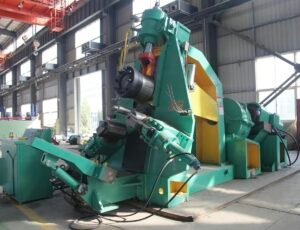
During the ring rolling process, the ring wall becomes thinner while the outside diameter expands. This allows manufacturers to create flange blanks closer to the required final size, reducing the amount of later machining.
The process is suitable for pipe flanges, welding neck flanges, pressure vessel flanges and industrial connection rings. These components are widely used in pipeline systems, petrochemical plants, pressure equipment and heavy machinery.
Compared with producing rings from solid material, ring rolling can help reduce waste and improve production efficiency. It also supports better metal flow, which is important for high-strength forged flange applications.
Machine selection depends on flange diameter, ring width, material grade, output requirement and workshop layout. For larger flanges, handling equipment and heating systems should also be considered.
A properly selected ring rolling machine can help flange manufacturers improve productivity, reduce material cost and produce more consistent forged ring blanks.