Blog
Ring Rolling Process and Industrial Applications
The ring rolling process is a hot forging method used to produce seamless forged rings. It is widely used in the production of flange rings, bearing rings, gear rings, wind power flanges, petrochemical rings, aerospace rings and heavy machinery components.
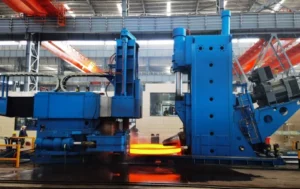
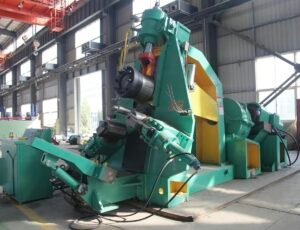
A CNC ring rolling machine forms a heated ring blank by applying controlled rolling force. As the ring rotates, its diameter increases while the wall thickness and height are controlled. This process is efficient, material-saving and suitable for producing strong seamless ring components.
What Is Ring Rolling?
Ring rolling is a forming process where a preformed ring blank is expanded into a larger ring. The ring blank is usually produced by heating a billet, upsetting it and piercing it to create a hole in the centre.
The ring blank is then placed into a ring rolling machine. The machine uses rolling tools to gradually enlarge the ring while controlling the cross-section.
In CNC radial axial ring rolling, the radial rolling system controls the ring diameter and wall thickness, while the axial rolling system controls the height and end faces of the ring.
Step-by-Step Ring Rolling Process
1. Billet Cutting
The process starts by cutting the raw material to the correct weight. The billet size must be calculated according to the final ring size, machining allowance and material loss during heating and forging.
2. Heating
The billet is heated to the correct forging temperature. Heating depends on the material grade, billet size and forming requirement. Correct heating is important because the material must be workable during rolling.
3. Upsetting and Piercing
The heated billet is upset and pierced to create a ring blank. This preforming step prepares the material for ring rolling.
4. Ring Rolling
The ring blank is transferred to the CNC ring rolling machine. The machine applies radial and axial rolling force to expand the ring and control its shape.
5. Size Control
During rolling, the ring grows in diameter. The machine controls the process according to the required outer diameter, wall thickness and height.
6. Cooling and Finishing
After rolling, the ring is cooled and may go through heat treatment, inspection and machining before final use.
Why Ring Rolling Is Used
Ring rolling is used because it can produce seamless rings with good material utilisation. Instead of cutting a ring from a large solid block or plate, the material is formed closer to the final shape.
This helps reduce waste and can improve production efficiency. For large rings and expensive materials, the material saving can be significant.

Common Applications of Ring Rolling
CNC ring rolling machines are used across many industries. Common applications include:
Flange rings
Welding neck flanges
Bearing rings
Gear rings
Slewing rings
Wind turbine flanges
Wheel hubs
Thin-wall cylinders
Petrochemical rings
Pressure vessel rings
Aerospace ring forgings
Heavy machinery rings
These products are used in pipeline systems, energy plants, wind turbines, ships, aircraft, engineering machinery, mining equipment and industrial drive systems.
Suitable Materials for Ring Rolling
Depending on machine configuration and process design, ring rolling can be used for many forgeable metals, including:
Carbon steel
Alloy steel
Stainless steel
Aluminium alloy
Copper alloy
Titanium alloy
High-temperature alloy
The material affects heating temperature, forming force, rolling speed, tooling and machine selection.
Advantages of the Ring Rolling Process
1. Seamless Ring Structure
Ring rolling produces a seamless ring without a welded joint. This is important for many industrial applications where strength and reliability are required.
2. High Material Utilisation
The process forms the material close to the final shape, helping reduce waste and machining allowance.
3. Efficient Production
For suitable products, ring rolling can be faster and more efficient than producing rings by cutting or heavy machining.
4. Suitable for Large Rings
Horizontal radial axial ring rolling machines can produce large diameter rings for wind power, petrochemical, aerospace and heavy machinery applications.
5. Flexible Product Range
Different machine models can support different ring sizes, heights and materials, making the process suitable for many industries.
6. Improved Consistency
CNC control helps improve repeatability and process stability for regular production.
Choosing Equipment for the Ring Rolling Process
A complete ring rolling production setup may include a heating furnace, forging press, manipulator, ring rolling machine, cooling system, inspection equipment and machining equipment.
The correct configuration depends on production scale and product type. For heavy rings, handling equipment and workshop layout are especially important because hot ring blanks are large and difficult to move manually.
Conclusion
The ring rolling process is one of the most important methods for producing seamless forged rings. It is widely used for flanges, bearing rings, gear rings, wind power rings, petrochemical components and heavy industrial applications.
Wiz Machinery can help customers source CNC horizontal ring rolling machines and related forging equipment according to ring size, material, production volume and project requirements.
Contact us to learn how the CNC Ring Rolling Machine fits your industry.
Featured Thinking
Blog Request a quotation Find out More High Pressure Water Descaling Machine for Forging Lines A high pressure water descaling machine is used to remove oxide scale from hot billets before forging. It is commonly installed in forging lines where billet surface quality is important and where manual scale removal is not practical for continuous […]
Blog Request a quotation Find out More How Ring Rolling Machines Improve Forged Flange Production Forged flange production requires accurate circular blanks, strong material structure and efficient use of steel. A ring rolling machine helps achieve these goals by forming heated ring blanks into seamless forged rings. https://youtu.be/PtuqaLDRB10 During the ring rolling process, the ring […]